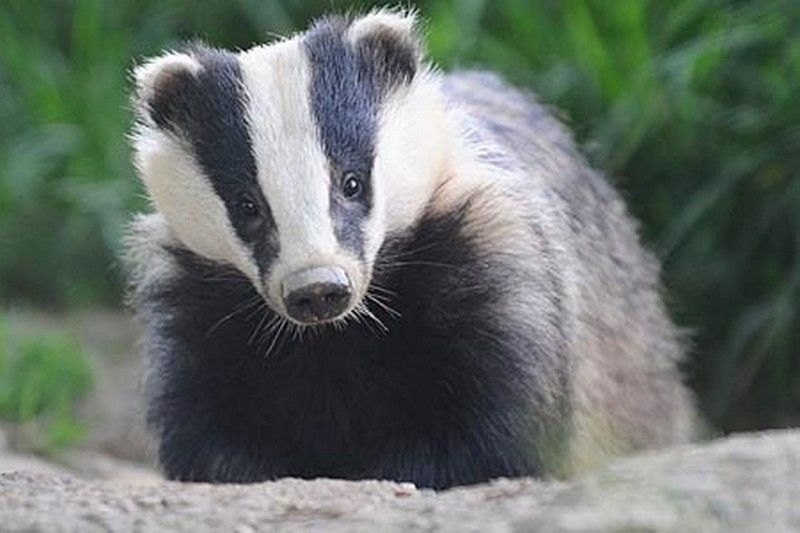
Meles meles
European Badger
The night-time burrow builder of Klekovača's forests.
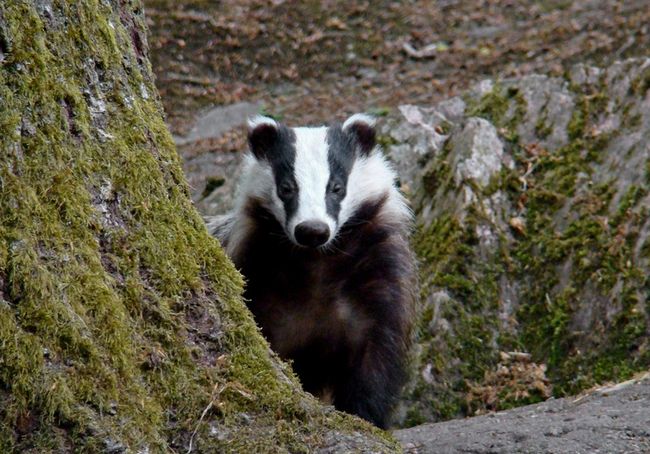
The badger belongs to the weasel family (Mustelidae). It has a stocky body, short, powerful legs with long claws on the forefeet, a wedge-shaped head and a short tail. Its back is a silvery grey, its belly and legs dark, and its head white, with two broad black stripes running from the snout over the eyes to the ears.
Its body is 60 to 90 cm long, the tail adds another 12 to 20 cm, and its weight usually runs from 7 to 13 kg; before winter, once it has laid down its fat reserves, it can reach 17 kg. It is active at dusk and by night, and spends the day in its sett — a branching system of tunnels and chambers with several entrances, used and enlarged by the family group over generations. It is an omnivore: earthworms are its staple food, and it also eats insects and their larvae, snails, small rodents, eggs, roots, acorns, beechnuts and woodland fruit. It does not truly hibernate, but in hard cold it will lie up in the sett for days at a time.
On Klekovača the badger inhabits the forests and forest edges all year round. Because it lives by night it is seldom seen; its presence is most often given away by sett entrances with heaps of excavated earth and by the diggings it leaves across the meadows — while for the patient hunter in a high seat, in the hush of dusk, it offers a rare and special encounter.
European Badger
Gallery
Game Species
Other Game
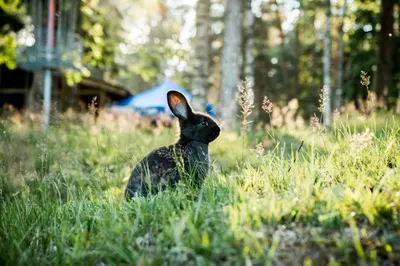
European Hare
Lepus europaeus
Fast and clever in flight, the hare brings the meadows and forest edges to life and is a classic quarry of the late-autumn hunt.
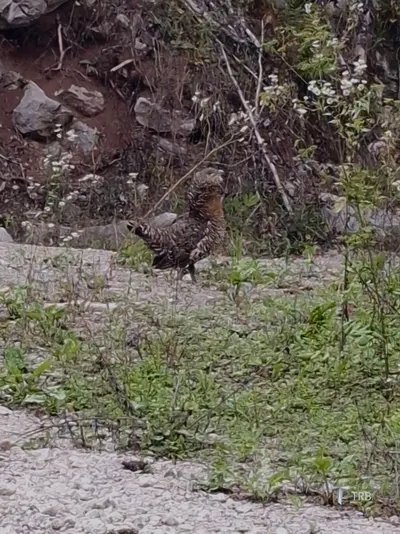
Western Capercaillie
Tetrao urogallus
The largest grouse in Europe, the capercaillie is a retiring recluse of untouched old-growth mountain forest.
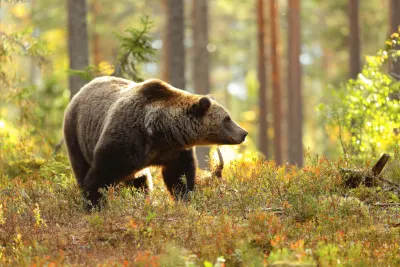
Brown Bear
Ursus arctos
Massive and wary, the brown bear rules the deep forests of Klekovača and is the most coveted trophy of our hunting ground.
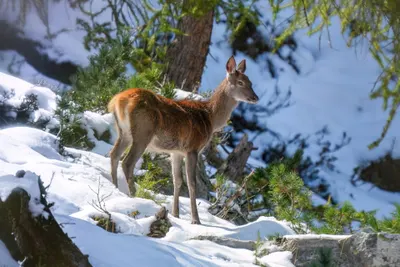
Red Deer
Cervus elaphus
The powerful red deer gathers his hinds across the high clearings, and his belling marks the arrival of autumn on Klekovača.